4 min read
DJI Mavic 4 Pro Aerial Filming: What the New Firmware Means
When a client books an aerial filming session, they don't think about firmware. They think about the shot: the drive up to a Carpathian ridge at golden hour, a real estate walkthrough that needs to look sharp on the first take, a construction site survey that can't be redone next week because of a glitch. But firmware is exactly what stands between a clean flight and a wasted trip. DJI's latest update for the Mavic 4 Pro — v01.00.0800, alongside matching updates for RC Pro 2, RC 2, and the DJI Fly app — is a reminder that the boring maintenance work is what makes the flashy footage possible.
A Small Update With a Real Job to Do
DJI's release notes for this one are short: 'fixed some known issues.' No new modes, no headline features. For a hobbyist that might read as skippable. For anyone flying commercially, it's the opposite — stability patches are usually what eliminates the small glitches that show up mid-flight: a hesitant gimbal response, a laggy transmission handshake, a controller pairing that takes three tries instead of one.
On a scheduled shoot with a client waiting, drop-outs and hiccups cost time and, occasionally, the shot itself. Updates like this one, plus the parallel DJI Fly app release focused on Android stability, are what keep a Mavic 4 Pro behaving the same way on flight fifty as it did on flight one.
Why the Mavic 4 Pro Fits Transylvania's Terrain
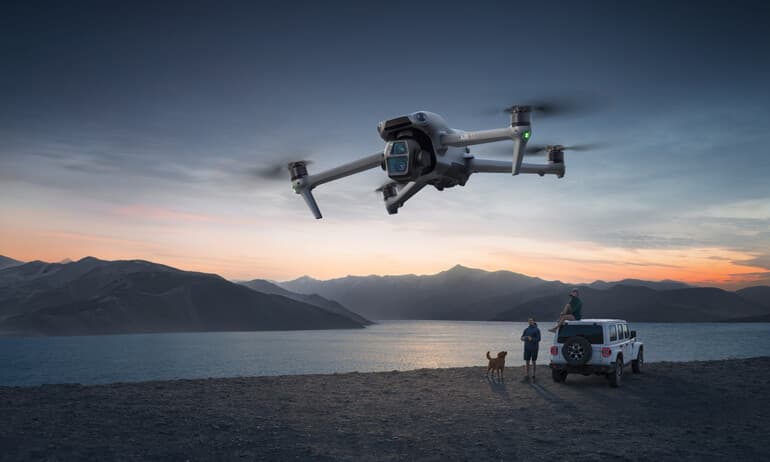
The Mavic 4 Pro's triple-camera system — a 100MP 4/3-inch Hasselblad sensor paired with 70mm and 168mm telephoto lenses — is well suited to the kind of varied subject matter this region produces. A single flight can go from a wide establishing shot of a fortified church to a compressed telephoto pass along a forest ridge, without swapping aircraft or lenses.
The Infinity Gimbal's full 360-degree rotation and upward-shooting angle add camera movements that used to require specialized rigs — useful for interiors, castle courtyards, or tight industrial spaces around Sibiu where a fixed-forward camera limits the composition. Combined with 51 minutes of flight time, forward LiDAR for low-light obstacle sensing, and the O4+ transmission system, the platform holds up well across the kind of varied conditions common in the Carpathians: dense tree lines, changing light, and longer distances from the pilot to the subject.
What This Means Before Your Next Booking
One detail worth flagging: DJI confirms that camera settings reset after this firmware install, meaning exposure profiles, color modes, and shooting presets need to be reconfigured and verified before flight. This is routine for any operator running a maintained fleet, but it's also exactly the kind of pre-flight check that separates a rehearsed shoot from an improvised one — dialing in white balance and log profiles on-site instead of guessing mid-air wastes light and time.
If an update fails outright, DJI's fix is the same as always: restart aircraft, controller, and app, or push the update through DJI Assistant 2 on a computer. Not glamorous, but it's part of the checklist that keeps a shoot day on schedule.
Firmware updates don't make headlines, but they're part of what keeps aerial filming equipment shoot-ready — updated, stable, and predictable before the camera ever leaves the ground. That's the standard we hold our platforms to for every real estate walkthrough, event capture, or industrial survey across Sibiu and the surrounding 150 km. If you have a project that needs the Mavic 4 Pro's range, resolution, or maneuverability, get in touch and we'll walk through what the shot requires.